Miyabi Koya Knives. Japanese Precision in Its Purest Form.
Miyabi Koya knives exemplify Japanese craftsmanship, minimalist design, and exceptional cutting precision. The collection was created for those seeking professional kitchen knives for everyday meal preparation. FC61 steel blades offer high hardness, corrosion resistance, and long-lasting sharpness. Thanks to FRIODUR® hardening and hand sharpening using the Honbazuke method, Miyabi Japanese knives glide smoothly through meat, fish, vegetables, and bread. Their distinctive octagonal handles, made from light-coloured Pakka wood, provide a secure grip and natural balance. Every Miyabi Koya knife is made in Seki, a Japanese city associated with the art of blade-making for centuries. The collection includes Kudamono, Shotoh, Santoku, Nakiri, and Gyutoh models, as well as a bread knife. The variety of blade shapes and lengths makes it possible to select the right tool for almost any kitchen task. The collection’s consistent aesthetic means that the knives are not only functional kitchen tools but also elegant additions to a modern interior. Miyabi Koya proves that the finest Japanese kitchen knives can combine outstanding sharpness, ergonomics, and timeless design.

Minimalist, perfectly balanced, and crafted in Seki, Japan, Miyabi Koya knives demonstrate that in good design, beauty is not an addition to function – it stems directly from it. In Japanese culture, everyday objects are often designed with extraordinary care and attention. Proportions, material properties, comfort of use, and the way a tool ages alongside its owner all matter. The Miyabi Koya 4000FC collection fits perfectly into this philosophy. It does not rely on excessive decoration. Instead, it attracts attention with its clean lines, light-coloured handle, and a blade whose quality can be appreciated from the very first cut. This collection is intended for those who expect more from kitchen tools than simply completing a task. Each model has been designed for a specific purpose, yet the entire collection shares the same design language: simplicity, balance, and respect for traditional craftsmanship.
Miyabi Koya Knives. Design Shaped by Function.
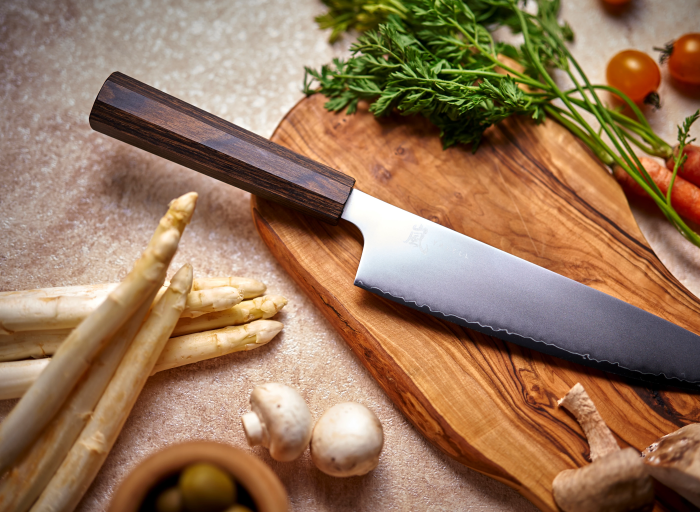
The most distinctive feature of Miyabi Koya knives is their light-coloured, octagonal handle made from Pakka wood. Its geometric shape subtly references traditional Japanese wa handles. However, this is not merely an aesthetic choice. The multifaceted form rests securely in the hand, makes the blade easier to control, and helps maintain a natural balance while cutting. Pakka wood is made from layers of wood impregnated with resin. As a result, it retains its natural appearance while offering greater stability and resistance to kitchen conditions than untreated wood. The light shade of the handle creates an elegant contrast with the cool steel of the blade. The overall design is minimalist without appearing austere – it retains the warmth of a handcrafted object. The subtle Miyabi logo on the blade completes the composition without drawing attention away from its most important feature: the proportions of the knife itself.
FC61 Steel and Honbazuke Sharpness.
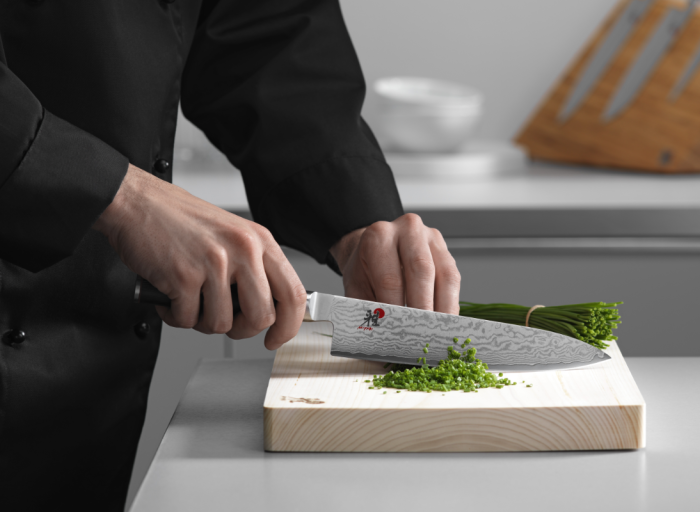
At the heart of every Miyabi Koya knife is a blade made from FC61 steel with a hardness of approximately 61 HRC. This material makes it possible to create an exceptionally sharp and precise cutting edge that retains its properties for a long time while remaining resistant to corrosion. The blades undergo FRIODUR® hardening, which improves their durability and ability to retain sharpness. Their final character is achieved through hand sharpening using the Honbazuke method. An edge sharpened at an angle of approximately 9.5–12 degrees allows the blade to move smoothly and cut accurately without tearing or crushing ingredients. The difference is particularly noticeable when working with foods that have a delicate texture. A ripe tomato retains its shape, fresh herbs are not bruised, and meat and fish can be portioned with a clean, controlled motion.
The Miyabi Koya Collection. One Design Language, Different Tasks.
The Miyabi Koya collection includes knives designed for the most important kitchen tasks. Each model has a different geometry, length, and centre of gravity, yet together they form a visually cohesive family.
Miyabi Koya Kudamono Knife 9 cm
The 9 cm Kudamono is the smallest and most precise model in the collection. It is ideal for peeling, trimming, and preparing fruit and vegetables. Its compact form provides excellent control whenever every millimetre of the cut matters.
Miyabi Koya Shotoh Knife 14 cm
The 14 cm Shotoh remains compact while offering a wider range of applications. It can be used for cutting smaller ingredients, preparing vegetables, and performing tasks that require focus and freedom of movement.
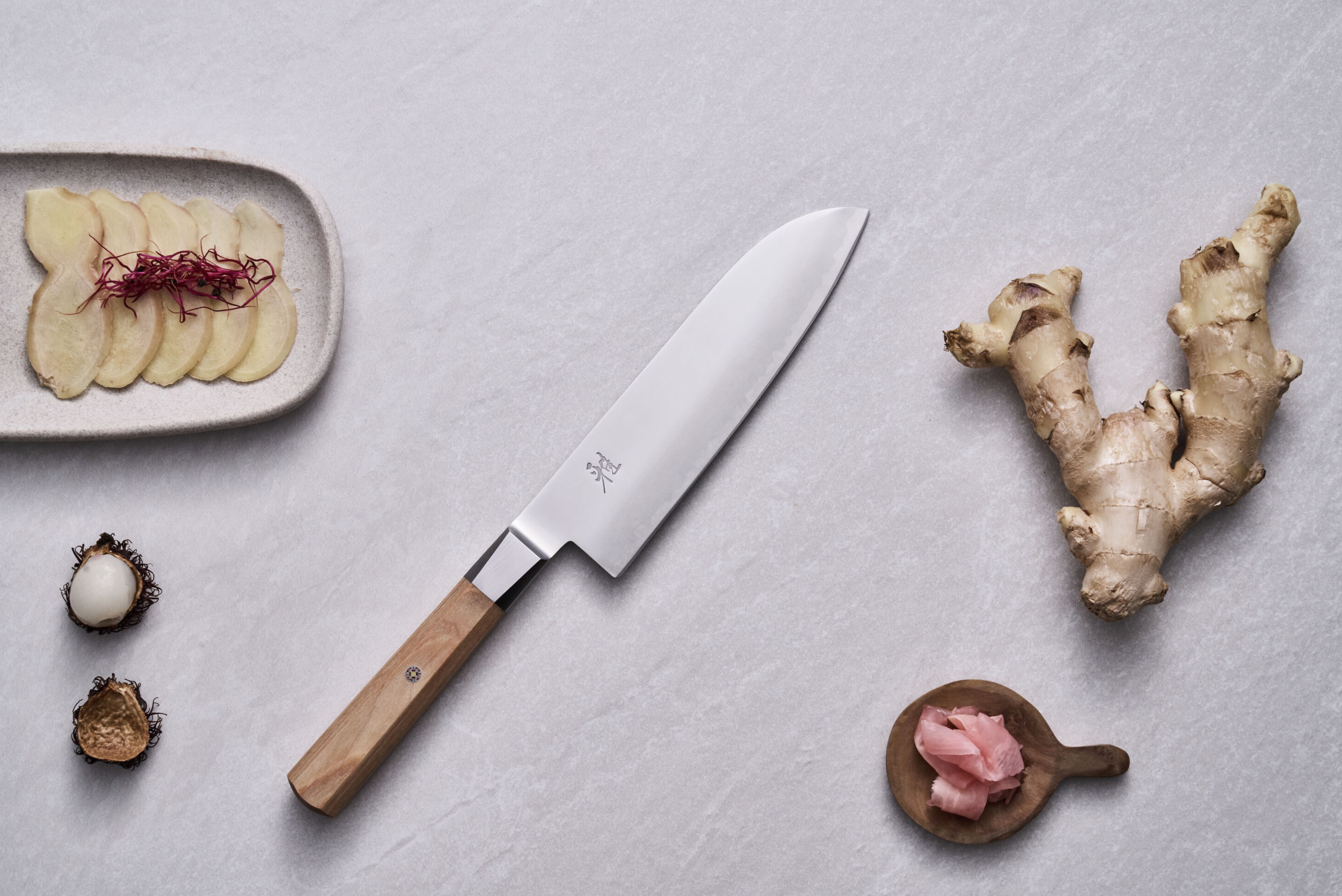
Miyabi Koya Santoku Knife 18 cm
The 18 cm Santoku is one of the most versatile models in the collection. It handles meat, fish, and vegetables with natural ease. Its wide blade and practical length mean that it can quickly become the primary knife used in the kitchen every day.
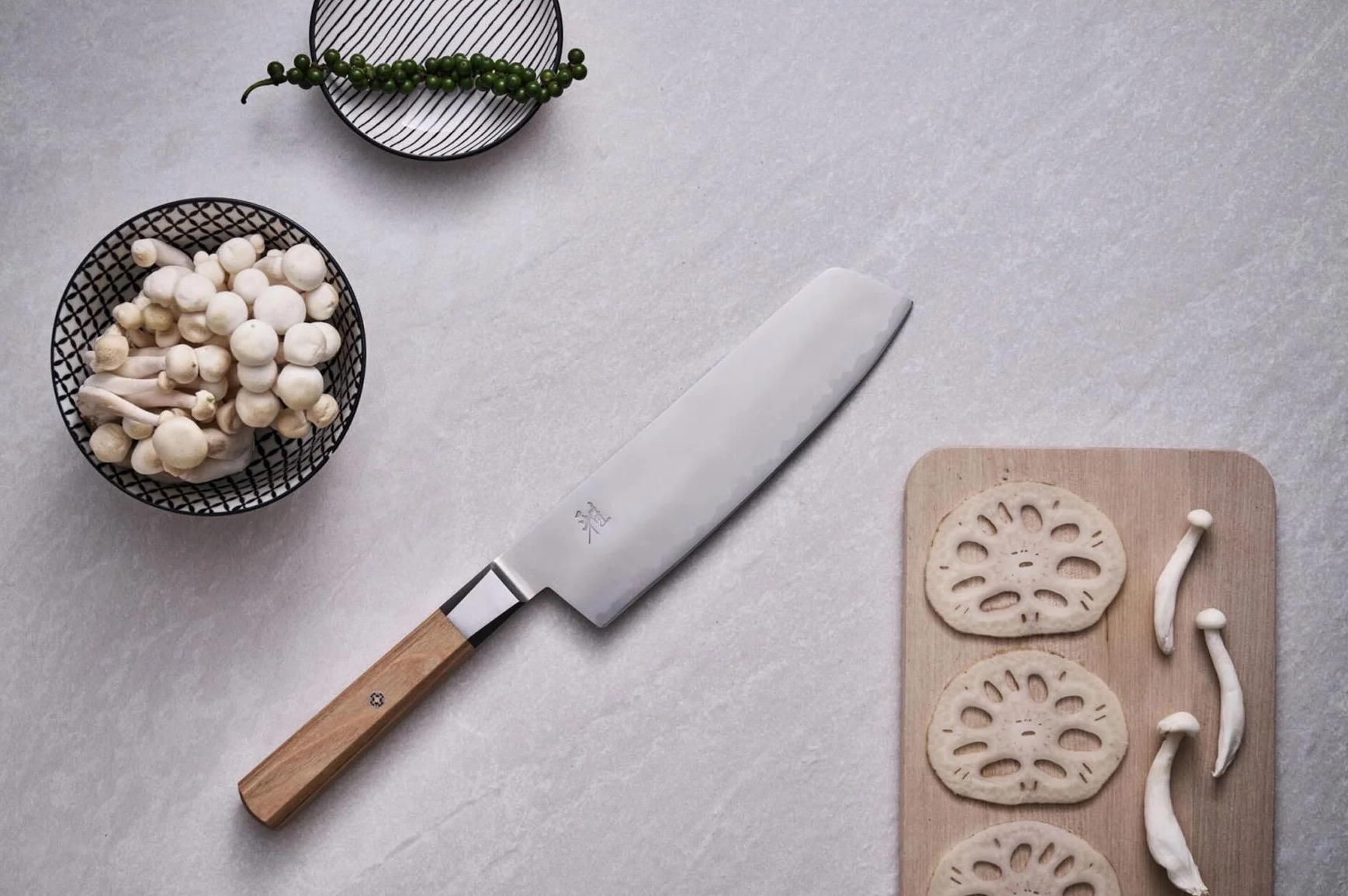
Miyabi Koya Nakiri Knife 18 cm
The 18 cm Nakiri was designed for preparing vegetables and herbs. Its tall, almost rectangular blade makes rhythmic chopping, cutting thin slices, and transferring prepared ingredients from the chopping board to a dish much easier.
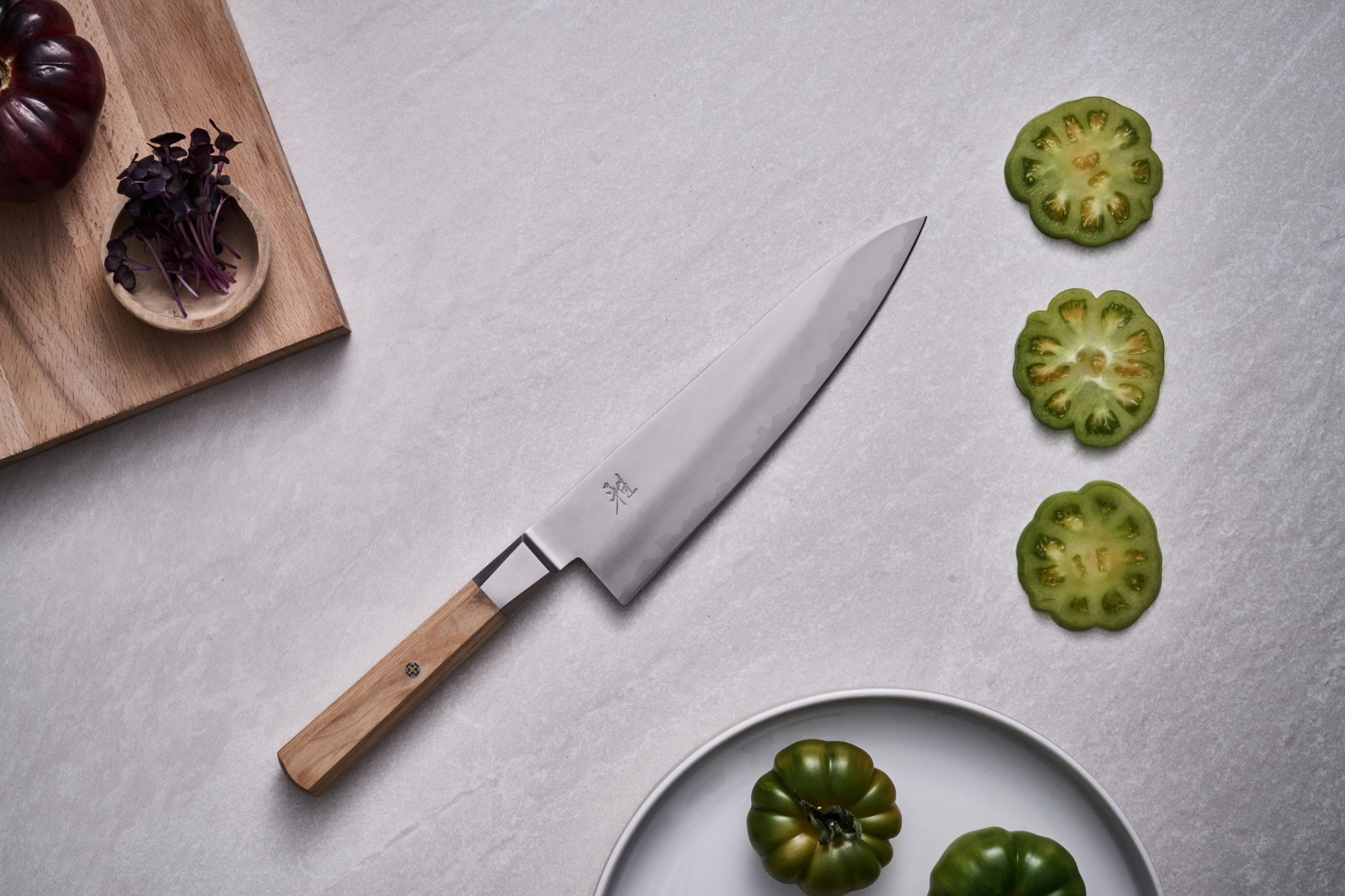
Miyabi Koya Gyutoh Knife 20 cm
The 20 cm Gyutoh is the Japanese interpretation of the classic chef’s knife. Its slender blade is ideal for portioning meat, slicing fish, and preparing larger ingredients. It is an excellent choice for anyone looking for one versatile knife suitable for most kitchen tasks.
Miyabi Koya Bread Knife 23 cm
The collection is completed by a bread knife with a 23 cm serrated blade. It glides through a crisp crust without crushing the soft interior of bread, baguettes, or rolls.
Seki. The City of Blades.
Miyabi knives are made in Seki, a city associated with the production of Japanese swords and cutting tools for centuries. The brand belongs to the German company Zwilling, so its products combine the expertise of Japanese craftspeople with the technological background of a company originating in Solingen. According to the brand, producing a Miyabi knife involves approximately 100 stages and takes 42 days. This combination of tradition and modernity is particularly evident in the Koya collection. A classic handle shape meets technologically advanced steel, while hand finishing is combined with the consistency required of a professional tool.
A Functional Object That Defines the Character of the Kitchen.
A well-designed knife changes not only the way ingredients are cut but also the rhythm of work. Force is replaced by control, and random movements give way to precision. Miyabi Koya is therefore more than an attractive piece of kitchen equipment. The collection’s aesthetic is directly connected to the ergonomics, balance, and intended purpose of each model. The light-coloured handles look equally at home in a minimalist kitchen or an interior based on natural materials. Ideally, the knives should be stored on a magnetic strip or in an open knife block, where they remain safe while becoming part of the kitchen design. These are tools created to be used, not merely admired. Their value reveals itself in everyday gestures: peeling an apple, chopping herbs, preparing vegetables, or slicing a fresh loaf of bread. This is where the meaning of Japanese simplicity becomes most apparent – an object should be beautiful because it performs its function perfectly.
 Polish